

/https%3A%2F%2Fwww.flower.se%2Fwp-content%2Fuploads%2F2026%2F10%2Fniloy-tanvirul-JHGsUzJlO2k-unsplash.jpg)
In just a few years, the energy market – and the balancing market in particular – has undergone fundamental change. A growing share of variable energy from sources such as solar and wind, combined with several market reforms introduced to keep pace with these developments, has in many cases had a negative impact on energy-intensive companies.
In Sweden, the introduction of flow-based capacity calculation, designed to make energy trading more efficient, has created a knowledge gap between traditional market participants and advanced asset traders. The introduction of 15-minute intervals, requiring increasingly sophisticated forecasting, has made the landscape more difficult than ever for energy-intensive companies to navigate.
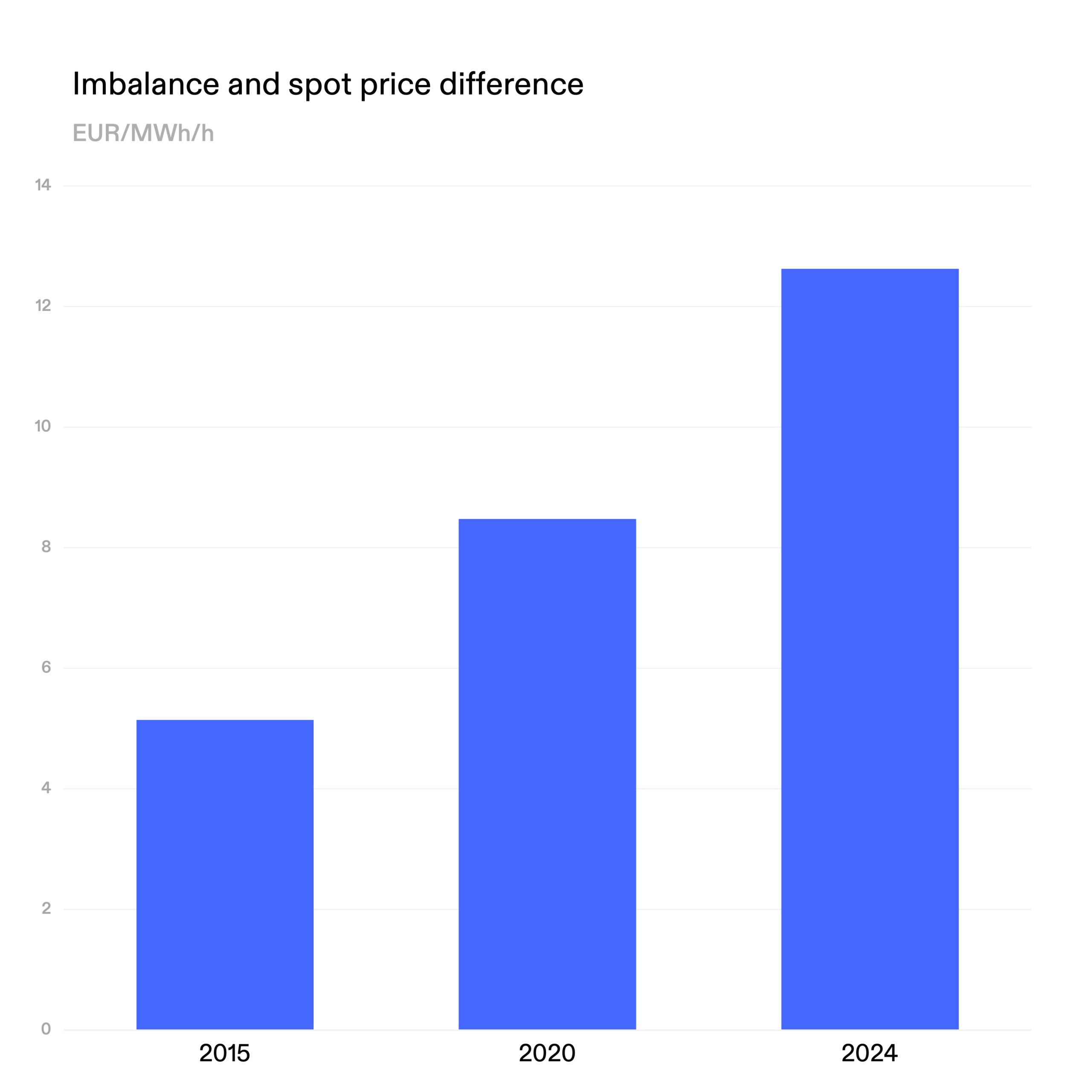
Differences between forecasts and delivery have increased in Sweden in recent years. Source: Nord Pool
The share of solar and wind power in the electricity system is expected to continue growing, contributing to a more volatile power system. As price movements in the energy market become larger and more rapid, the financial consequences of deviations between forecast and actual consumption or production also increase.
For energy-intensive companies, this means that even relatively small volume differences between forecast and delivery can become significantly more costly than before, as the spread between day-ahead and imbalance prices can widen sharply close to delivery. The ability to continuously adapt to changing market conditions will therefore become increasingly important in the energy system of the future.
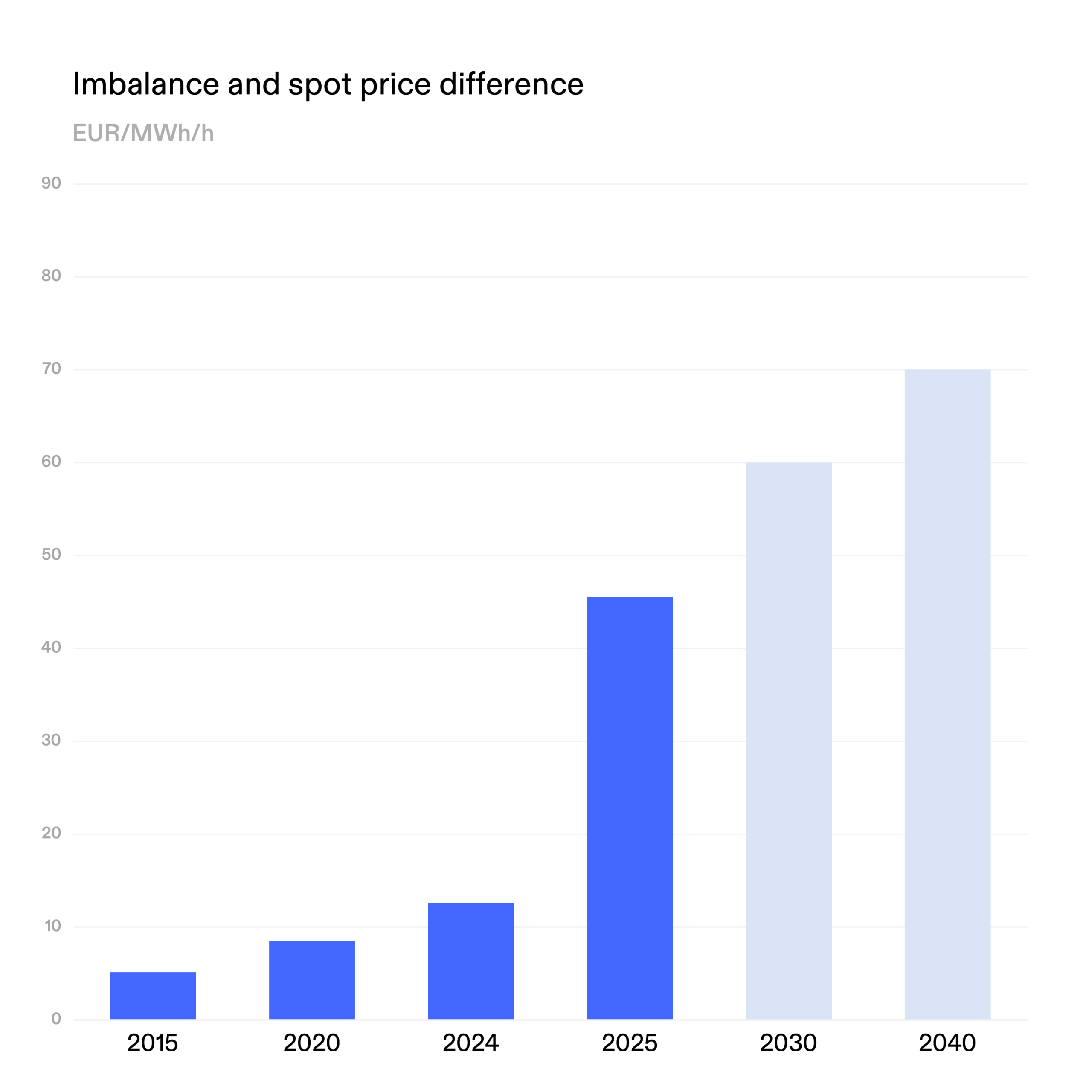
In Sweden, the cost of inaccurate forecasts is expected to increase in the future. Source: Nord Pool, illustrative example
Traditionally, energy-intensive companies have not been exposed to imbalances to the same extent as they are today. The electricity system was less volatile and imbalances occurred less frequently. When imbalances did occur, the associated cost was treated as a calculated risk that companies either chose to carry themselves or transferred by paying a premium to their Balance Responsible Party (BRP). These premiums were lower than they are today because volatility in the electricity system – and consequently the underlying risk – was significantly lower.
Download the full white paper.
Imbalances are still priced today, with the resulting costs borne by the party carrying the risk. However, the risk itself is not actively mitigated. Instead, companies rely on forecasts that can quickly become outdated between prediction and actual delivery. In this context, companies’ consumption profiles are often too inflexible to respond to the rapid changes now occurring in the electricity system.
A third-party with the right technology and expertise to manage the complexity and risks of the market can instead help companies become more resilient over time, providing expertise across four key areas:
01. Energy storage
Large-scale Battery Energy Storage Systems (BESS) provide a critical source of flexibility that can compensate for unexpected changes in electricity consumption, for example during production outages at industrial facilities. By rapidly adjusting their consumption or output, battery systems can manage deviations between planned and actual electricity use. This helps stabilize the consumption profile, reducing the risk of imbalances and contributing to lower imbalance costs.
02. ML-driven forecasting
Today’s forecasting tools provide increasingly sophisticated and accurate predictions, with ML-driven algorithms taking thousands of data points into account. This technology enables electricity consumption to be adjusted more effectively in response to market price developments.
03. Real-time optimization
More advanced forecasting enables optimization that can adapt a company’s consumption levels to the needs of the electricity market, with precision down to 15-minute intervals. Today’s real-time optimization can also be combined with continuous intraday trading, reducing the risk of significant deviations – and therefore net costs – between the established forecast and actual delivery.
04. Revenue from ancillary service markets
Additional revenue streams can be created by connecting and optimizing energy-consuming assets for participation in ancillary service markets. Through balance responsibility, broad access to all relevant energy markets and algorithms capable of optimizing energy resources across markets, an advanced third-party provider can turn volatility into stability.
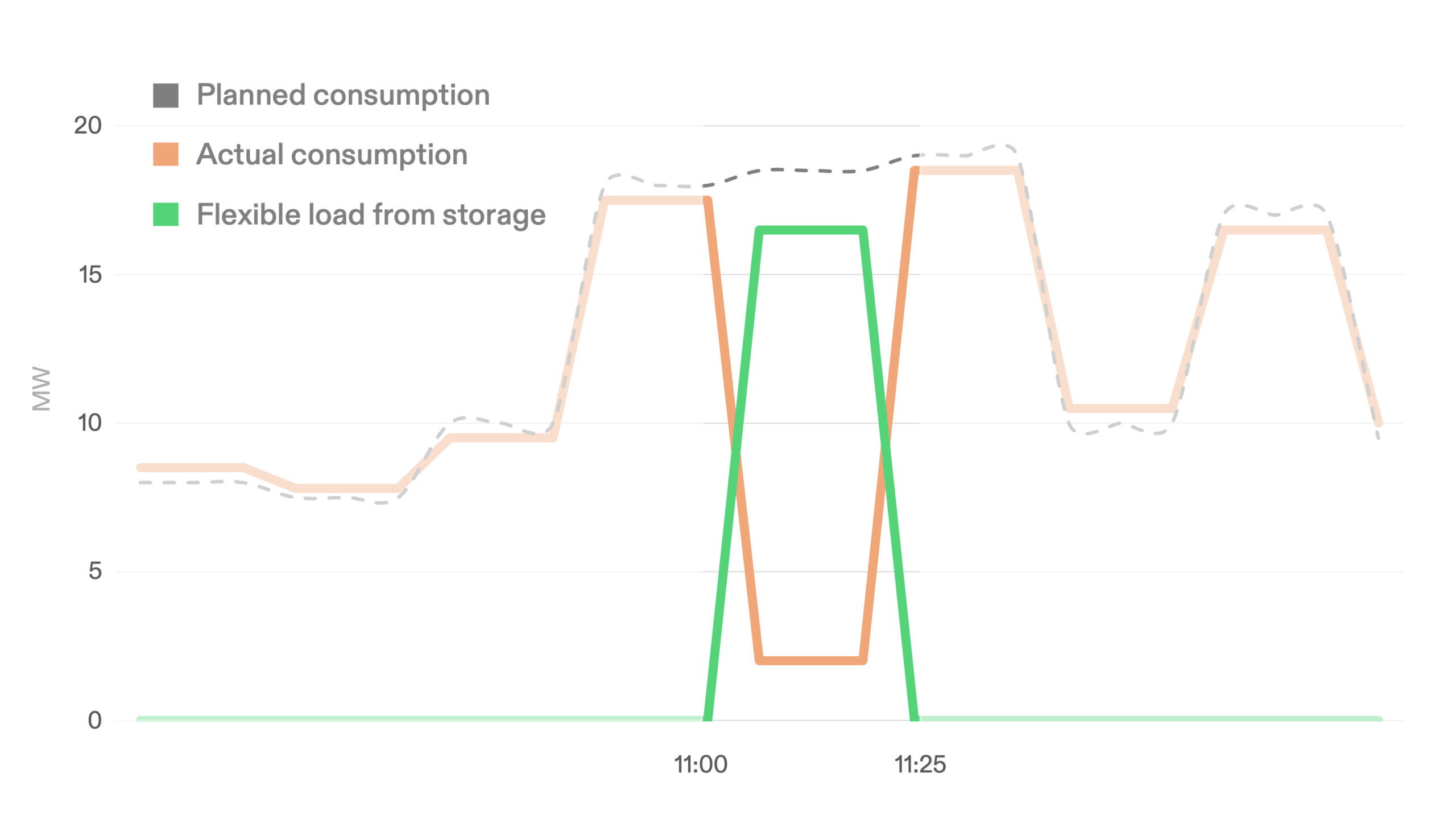
In the event of unforeseen circumstances, such as production outages, flexible capacity from battery storage can compensate for reduced consumption and thereby reduce the risk of imbalances.
Imbalances have long been viewed as a necessary evil for industry. With the right technology, however, the associated costs can instead be treated as an optimization problem. Historically, companies had to either accept the risk, pay to reduce it or invest in extensive internal resources to manage it. Today, an advanced third-party provider with a large battery portfolio and proven optimization solutions can effectively manage these fluctuations, minimizing companies’ exposure to risk – both now and in the future.
Tomorrow’s increased volatility will change the conditions under which many companies operate, but it does not necessarily have to result in negative consequences. With an advanced third-party provider enabling an effective risk-management strategy, companies can reduce uncertainty and strengthen their resilience in a rapidly changing energy market.
Market insight
/https%3A%2F%2Fwww.flower.se%2Fwp-content%2Fuploads%2F2026%2F05%2FELLEVIO.Final-113_webedit.jpg)
Market insight
/https%3A%2F%2Fwww.flower.se%2Fwp-content%2Fuploads%2F2025%2F11%2FDJI_0638_Bredhalla_TomasArlemo_1440x9601.jpg)
Op-ed
/https%3A%2F%2Fwww.flower.se%2Fwp-content%2Fuploads%2F2025%2F10%2F22.10.25_John-COP30-01.jpg)
Perspective
/https%3A%2F%2Fwww.flower.se%2Fwp-content%2Fuploads%2F2025%2F09%2FWind-power-Locus-02.jpg)