

November 18, 2026
Op-ed published in Energy Loop, 18 november, 2026: "Electrification, new renewable energy capacity, and energy-intensive data centers are putting the Swedish electricity grid under mounting pressure. Local flexibility markets can help grid operators manage peak demand and connect more customers faster. But progress is far too slow, and three key measures could help accelerate development," write Flower's David Elez Berselius and Hedda Brickstad.

Pressure on the Swedish electricity grid is increasing rapidly. Industries and transportation are electrifying, new wind and solar power capacity needs to be connected, and already lengthy grid connection queues have grown even longer as new energy-intensive data centers apply for grid access.
At the same time, the grid is rarely operating at full capacity around the clock. Capacity constraints typically occur during a limited number of hours, particularly on cold winter days when heating demand is high. This is precisely where local flexibility markets can make a difference.
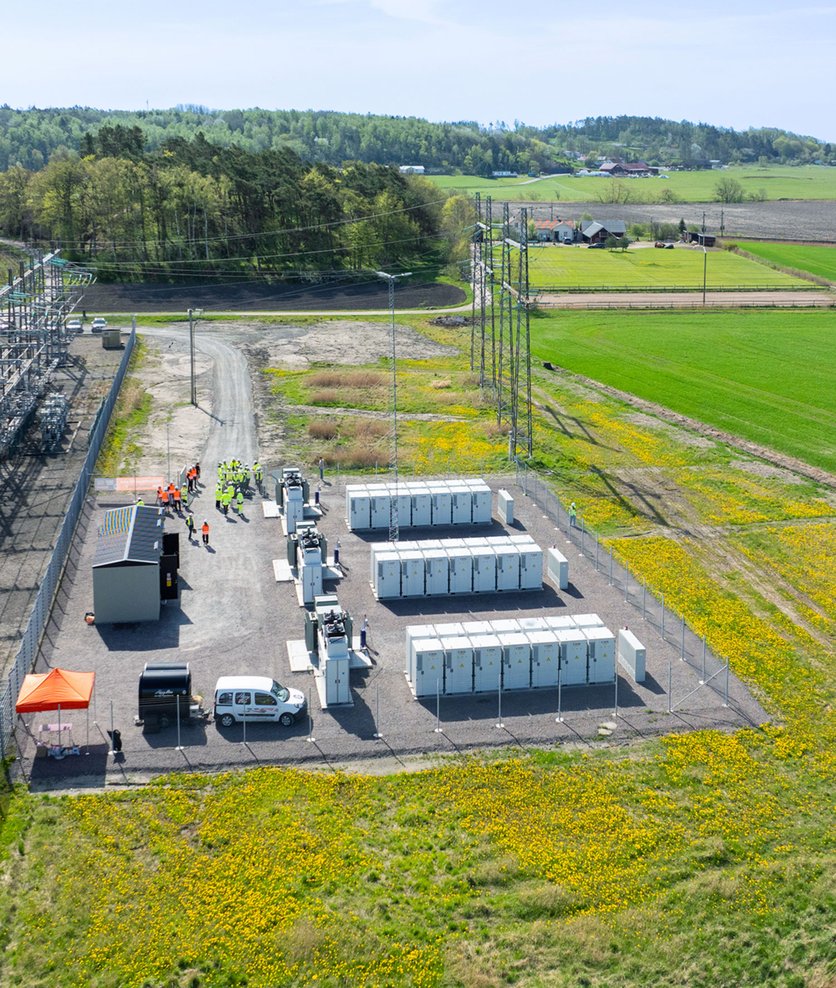
Batteries and other flexible resources can quickly reduce their electricity consumption or feed power into the grid in response to price signals reflecting the grid’s needs. Well-designed local flexibility markets give grid operators an effective tool to manage congestion and peak demand without having to expand the grid to accommodate the most demanding hours of the year. This reduces pressure on the grid when it is most strained, lowers costs, and allows more customers to connect to existing infrastructure sooner.
Households and businesses need affordable electricity, and rising grid fees are a major part of the problem. Despite this, the development of local flexibility markets is moving far too slowly. At the national level, large volumes of flexibility are traded in well-functioning markets, but at the local level, the potential remains significantly underutilized.
To change this, the industry needs to standardize and coordinate how these markets are designed, enabling more participants to take part.
⸻
We see three critical areas for action:
1. Standardized technical solutions
Initiatives such as sthlmflex, Uppflex, Effekthandel Väst, and E.ON’s flexibility markets demonstrate that the resources are available and that local markets can effectively relieve pressure on the grid. However, each market has its own technical interfaces, processes, and requirements. This means providers must develop a new integration for every market, which takes time and money. For smaller players, these costs can become a barrier that prevents them from participating altogether.
At the same time, several promising initiatives are already underway. Energiföretagen Sverige, together with its member companies, has developed standardized market products, and well-functioning API solutions already exist, such as E.ON’s SWITCH platform.
As the next step toward standardization, the industry needs to establish common technical interfaces for data exchange. This would allow providers to connect to multiple markets without building a separate integration for each one, reducing costs and enabling nationwide scaling.
2. A common compensation model
So far, integration processes have been lengthy and costly, while activations have been infrequent and traded volumes small. We therefore propose a substantial availability payment that covers both integration costs and the opportunity cost of reserving capacity.
Local flexibility must also be compatible with participation in other markets. If 1 MW of a 10 MW battery is activated locally, the remaining 9 MW should be freely available for use in other markets.
3. A coordination mandate for the Swedish Energy Markets Inspectorate
The development of local flexibility markets has so far been driven by a handful of larger grid operators, which is understandable. However, Sweden has many more grid companies, and many face the same capacity challenges without having the resources to establish their own markets.
The Swedish Energy Markets Inspectorate’s (Ei) proposal for a new revenue regulation framework gives grid operators clear incentives to develop their flexibility capabilities. But beyond this, the government should also give Ei an explicit mandate to promote local flexibility markets in dialogue with grid operators, based on standardized interfaces and a common compensation model.
In return, those of us who can provide flexibility, including optimizers, aggregators, and electricity retailers, should collectively commit to participating in markets that meet these requirements. At Flower, we are ready to contribute our capacity.
This winter, electricity grids in many parts of Sweden will once again be pushed to their technical limits during the coldest hours. Often, flexible resources are already available in the same areas and could help relieve pressure on the grid, but there is no local market through which they can provide their services. It does not have to be this way.
The cheapest grid capacity is the capacity we already have. Now, grid operators, regulators, and market participants must take shared responsibility for ensuring it is used to its full potential.
⸻
David Elez Berselius, VP Product, Flower
Hedda Brickstad, VP Distributed Assets, Flower
Perspective

Market insight
Market insight

Op-ed